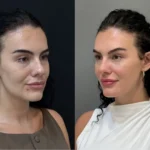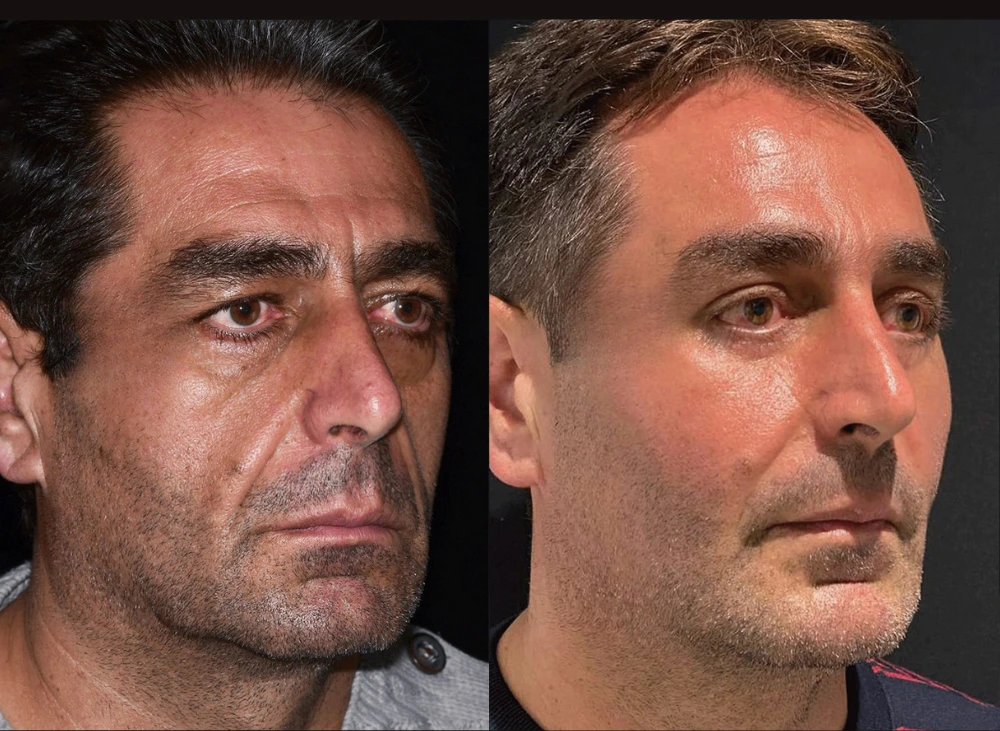
Fat transfer has an unusual recovery pattern. The treated area often looks fuller in the first few days than it will in the final result.
Then the swelling starts to drop. Your face can suddenly look smaller than you expected. A lot of people worry at this stage. Is the fat disappearing? Did the surgery not work?
Usually two things are happening at once. Swelling is going down. And yes, some of the transferred fat is being absorbed by your body. That’s normal. What’s left still needs time to settle in. That part doesn’t happen in a week.
So how much fat actually stays? When can you trust what you see in the mirror? And why do some people keep more volume than others? Here’s the honest breakdown.
Why “Survival” Isn’t About How Much Gets Injected
Fat is usually taken from the abdomen, thighs, or flanks. It’s then placed into the cheeks, temples, under-eyes, chin, jawline, or nasolabial folds.
The moment fat leaves its original spot, it loses its blood supply. For it to survive, it needs oxygen and nutrients from the tissue around it. New blood vessels have to grow in. Cells that manage this stay. Cells that don’t get absorbed by the body.
That’s what “fat survival” really means. It’s not about how much was injected on day one. It’s about how much becomes living tissue that stays for good.
So What Percentage Actually Survives?
Be careful with any clinic promising an exact number, like “80% guaranteed.”
The honest answer is that it varies a lot. One review looked at more than 1,000 facial fat-transfer patients across 27 studies. Survival ranged from 26% to 83%. The average sat around 47%. Other research on facial fat puts the long-term range closer to 25–80%.
That’s a widespread. It’s not because surgeons are inconsistent. Fat simply behaves differently from person to person, and area to area.
Part of the reason is how studies measure results. Some use photos. Some use 3D scans. Some use MRI. Some check at three months, others at a year. Fat in the cheeks doesn’t behave like fat under the eyes. So one study’s percentage can’t predict your outcome.
The honest takeaway: some fat will stay. Nobody can promise you an exact number before surgery.
Why Surgeons Inject Fat in Tiny Amounts
You’d think more fat placed at once means a bigger, longer result. It’s actually the opposite.
Fat gets injected in small parcels, spread across different layers. Smaller deposits touch more healthy tissue. That means better access to oxygen while new blood vessels form. Large clumps behave differently. Cells sitting in the middle often don’t get enough blood flow. Those cells get absorbed, or worse, turn hard.
So overfilling one spot doesn’t mean a fuller, longer-lasting result. It often does the opposite. It raises the risk of lumps and uneven contours. Precision matters more than volume.
Your Face Goes Through Three Different Looks
Most people expect one “before and after.” In reality, there are three phases.
Right after surgery, you’re looking at transferred fat, swelling, fluid, and inflammation. Surgeons often overfill slightly on purpose, planning for some absorption. Your face may look round or puffy. This is not your result yet.
A few weeks in, swelling drops and the face looks less full. Some early fat loss happens here too. The area feels softer, but healing is still ongoing.
Around three months and beyond, most swelling has resolved. The fat that’s going to stay has largely settled. This is when you can actually judge the result. Some people keep refining up to six months.
The First Few Days
Expect your face to look fuller than you imagined. Sometimes one side looks bigger than the other. That’s usually just uneven swelling, not a mistake.
The donor site often hurts more than your face. Most people compare it to a deep bruise or soreness after an intense leg day.
The first 48 to 72 hours matter most. This is when the fat depends heavily on surrounding tissue for survival, before it builds its own blood supply. Follow your surgeon’s instructions closely here. Don’t massage or press treated areas unless told to.
Weeks One and Two: Still Too Early to Judge
Swelling keeps dropping through this window. Bruising usually shifts from purple to yellow before it fades. Mornings tend to look puffier than evenings.
Many people feel ready for desk work within one to two weeks. It depends on how much fat was transferred, and whether liposuction was combined with it. The donor area often takes longer to feel normal than your face does.
Looking presentable at two weeks doesn’t mean the fat has settled. It hasn’t.
Weeks Three to Six: The Confusing Stretch
This is usually when people start worrying most. Early swelling is mostly gone. The face looks less full than it did in week one. It’s tempting to think the fat just vanished.
Most of the time, that’s not it. Some of what you’re seeing is swelling finally leaving the tissue. Some fat absorption is also happening, and that’s expected.
One tip that helps: stop comparing yourself with random phone selfies. Lighting and angle can make normal daily swelling look like a big change. If you want to track real progress, use the same distance, lighting, and angle every time.
The Three-Month Mark Is Your Real Checkpoint
By three months, most swelling has resolved. Most early fat absorption has already happened too. This is when your surgeon can give you a meaningful assessment, comparing it to your original photos.
A good assessment looks beyond “is it fuller.” It checks facial balance, how the under-eye blends into the cheek, symmetry, and how your face moves when you smile. The goal was never just volume. It’s harmony.
Between three and six months, things keep settling. Firm spots soften. This is also the right time to discuss a second session, if you need one. Not before.
Does the Surviving Fat Stay Forever?
Fat that successfully takes root becomes real tissue in its new home. It can last a very long time.
But “long-lasting” doesn’t mean frozen forever. Transferred fat behaves like the rest of your body fat. Weight loss can shrink it. Weight gain can enlarge it. Your face keeps aging too, skin thins, ligaments loosen. Fat transfer creates lasting improvement. It doesn’t pause time completely.
What Actually Affects How Much Fat You Keep
A few things genuinely matter:
- Technique. Careful harvesting and small, well-placed deposits beat aggressive, high-volume injection.
- The treated area. Cheeks, temples, and under-eyes all have different tissue and blood supply.
- Smoking and nicotine. These reduce blood flow, which hurts the fat’s chances of surviving. Be upfront about vaping, patches, or gum too, not just cigarettes.
- Weight stability. If you’re actively losing weight, it’s smarter to wait until you’ve stabilized.
- Your own biology. Two people can get identical treatment and retain different amounts of fat. That’s just how healing works.
No supplement or superfood guarantees a specific survival rate, no matter what you read online. Good nutrition helps healing generally. But don’t start supplements without checking with your surgeon, some raise bleeding risk.
Is a Second Session Normal?
Yes. It doesn’t mean the first one failed. Surgeons sometimes keep the first session conservative on purpose, especially in delicate spots like under the eyes.
A touch-up gets considered when more fat absorbed than expected, or one area retained less than the rest. The key is waiting until your first result has actually settled, usually three to six months in, not two weeks.
When You Should Call Your Clinic
Normal swelling and bruising should steadily improve, not get worse. Call your clinic right away if you notice rapidly increasing swelling, worsening pain, spreading redness, fever, a bad smell from an incision, sudden skin color changes, vision changes, chest pain, or trouble breathing.
Facial fat transfer is real surgery. Rare but serious complications have been documented. This is exactly why surgeon experience matters more than how good the “after” photos look.
Fat Transfer at Blue Angel Polyclinic
Blue Angel Polyclinic offers full-face fat transfer for patients looking to restore lost volume naturally. Fat is taken from areas like the abdomen or thighs, then placed into the cheeks, temples, under-eye hollows, chin, or deeper folds.
Every face gets assessed individually. Your available donor fat, skin quality, and how much change you want all shape the plan. There’s no standard package here.
A consultation is the right place to talk through realistic expectations, recovery, and whether one session will be enough for you.
Final Thoughts
Fat transfer doesn’t give you an instant result. It looks too full in week one, too deflated by week three, and only starts making sense around month three.
Retention numbers online vary widely for a reason. No single average can predict your outcome. What matters is choosing an experienced surgeon, following your aftercare closely, and giving your face the months it actually needs before you judge anything.
The result worth caring about isn’t the face you see a week after surgery. It’s the one still there, settled and natural, six months later.