Purpose and Benefits of a Facelift
Selecting a Surgeon
How to Choose a Qualified Facelift Surgeon
Choosing the right surgeon is pivotal to achieving safe, natural, and satisfying results. Consider the following:
- Verify the surgeon’s medical education, specialized training, and board certification in plastic surgery
- Look for substantial experience specifically with facelift procedures
- Review before-and-after galleries of the surgeon’s previous patients
- Ensure you feel comfortable and confident discussing your goals with your surgeon
- Confirm membership in reputable organizations such as The Aesthetic Society
What to Expect During Your Consultation
Most initial consultations involve a thorough evaluation and may include a fee. During this session:
- Discuss your aesthetic objectives and concerns in detail
- Your surgeon will assess your skin elasticity, facial structure, and overall health
- Photographs may be taken for planning and to illustrate potential outcomes
- Review your complete medical history, including previous procedures and current medications
- Explore surgical options tailored to your needs, as well as adjunct or alternative treatments
Questions to Ask Your Surgeon
To ensure clarity and confidence, consider discussing:
- Am I a suitable candidate for a facelift?
- What type of facelift technique would you recommend based on my anatomy and goals?
- Can I see before-and-after photos from patients with similar concerns?
- What is the expected length and location of incisions?
- What anesthesia options are available and recommended?
- What will the recovery timeline look like?
- What are the potential risks and complications?
- What contingency plans exist if results need refinement?
- What financial investment and payment options are involved?
Preparing for your Procedure
Preoperative Preparation for Facelift Surgery
Your surgeon will provide personalized instructions to help ensure a smooth surgery and recovery. Key preparation steps include:
- Cease smoking well in advance to promote healthy healing
- Avoid medications and supplements that can increase bleeding risk, such as aspirin and certain herbal products
- Maintain proper hydration before and after the procedure for optimal recovery
- Stabilize your body weight and follow any lifestyle advice from your surgeon
- Arrange for a responsible adult to drive you home and provide assistance for at least 24 to 48 hours post-surgery
Optimizing Your Home and Recovery Environment
- Consider coloring your hair shortly before surgery if desired, as you should wait several weeks afterwards before doing so
- Prepare nutritious meals rich in lean protein and low in sodium for the initial recovery period
- Organize a comfortable resting area, ideally with an adjustable chair or several pillows for head and leg elevation
- Choose loose, front-opening clothing and slip-on footwear for easy dressing during recovery
- Avoid strenuous activities, hot baths, and intense heat exposure (saunas, hot tubs) for several weeks post-procedure
What Happens on the Day of Surgery?
- The procedure is commonly performed in an accredited facility including hospitals or specialized surgical centers
- Surgery typically lasts two or more hours depending on complexity
- Medications including sedation or general anesthesia are administered by qualified medical personnel
- Vital signs such as heart rate, blood pressure, oxygen levels, and pulse are monitored throughout
- The surgeon implements the pre-planned surgical approach, with adjustments as needed to maximize results
- Postoperative dressings with gentle compression will be applied, and drainage tubes may be temporarily placed to prevent fluid accumulation
- You will recover in a monitored setting before discharge, ensuring safety and comfort
- An escort will be required for your return home or to your recovery location
Aftercare & Recovery
Recovery Timeline and Expectations
The healing process varies with the extent of the facelift, but careful adherence to aftercare advice will support the best outcomes. Your surgeon will provide instructions on:
- Managing drainage tubes and wound care
- Identifying expected symptoms such as swelling, bruising, discomfort
- Recognizing warning signs of complications
Immediate Postoperative Period
- Compression garments or wraps help reduce swelling and support tissues, to be worn exactly as directed
- Keep your head elevated and avoid bending forward to minimize swelling
- Mild to moderate discomfort can be managed with prescribed medications; severe pain warrants prompt surgeon contact
- Tightness and swelling are common, usually highest in the first 48 hours and diminishing thereafter
- Drainage and bruising occur naturally and will lessen over about two weeks
First Two Weeks
- Driving is generally restricted for at least seven days
- Bulky dressings and drains will be removed during a post-op visit
- You may need to wear a supportive elastic facial garment to aid healing
- Avoid taking aspirin or anti-inflammatory drugs unless approved by your surgeon
- Sleep with your head elevated around 40 degrees; additional pillows may improve comfort
- Use cool (not ice-cold) compresses around eyes without applying pressure
- Stay mobile with gentle activity to facilitate circulation and swelling reduction
- Avoid heavy lifting and bending that could elevate blood pressure and provoke bleeding
- Hair washing is permitted gently 24 hours post-surgery avoiding direct water pressure on face
- Showering is allowed the day after surgery, avoiding direct sprays to the surgical area
Two to Six Weeks
- Refrain from swimming, vigorous exercise, and contact sports for at least one month
- Numbness around earlobes and facial areas may persist but should gradually resolve
- Sleep in a supported/reclined position avoiding flat or stomach sleeping
- Makeup application should wait until cleared by your surgeon
- Scars may initially appear red, firm, and raised but will soften and fade gradually over several months
- Protect skin from sunlight with high SPF sunscreen, hats, and sunglasses to prevent pigmentation changes
Long-Term Recovery
- Return to usual fitness and physical routines typically around two months post-surgery
- Discomfort, tightness, or tingling should resolve by six months
- Schedule and attend all postoperative visits for proper healing assessment
- Facelift scars continue to mature for up to a year and require sun protection during this time
Results
Longevity of Facelift Outcomes
The duration of facelift results depends on genetics, skin quality, lifestyle, and the specific surgical technique employed.
- Minimal Facelift / Lunchtime Lift: Provides quick recovery but shorter-lasting results due to limited tissue adjustment.
- Mini Facelift / S-Lift: Focuses on limited skin undermining and SMAS mobilization ideal for younger patients; results can endure several years.
- Full or Classic Facelift: Involves comprehensive lifting and tissue restructuring addressing advanced facial aging, with results lasting a decade or more.
Postoperative Considerations
To support lasting outcomes, follow your surgeon’s recommendations carefully and attend all follow-up appointments. Contact your surgeon if you notice any unexpected changes or have concerns about your healing progress.
Incisions and Scars
Types and Placement of Facelift Incisions
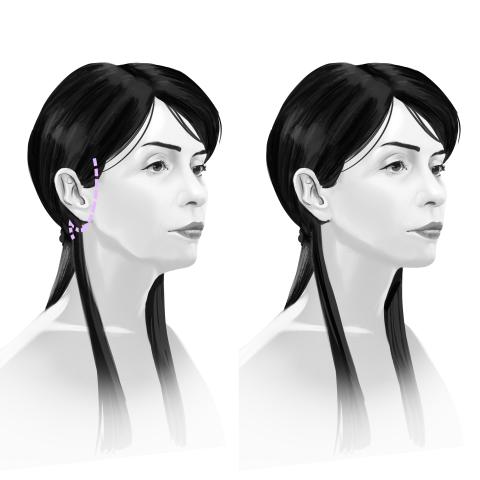
Regardless of the facelift variant, incisions are typically discreetly placed around the ears, extending into the hairline to minimize visible scarring. The incision pattern follows natural facial contours to conceal healing lines effectively.
Scar Appearance and Management
Experienced surgeons position incisions within natural skin creases and hair-bearing areas to ensure scars blend seamlessly as they heal. Individual healing varies, influenced by factors like surgical technique, nutrition, smoking status, and genetics.
There is a risk of hypertrophic or keloid scars, especially in patients with darker skin tones. When necessary, treatments such as corticosteroid injections may be recommended to optimize scar appearance.
Safety Considerations
Potential Risks and Complications
Facelift surgery is generally safe when performed by a qualified surgeon, but as with all surgeries, some risks exist and should be understood before proceeding:
- Adverse reactions to anesthesia
- Hematoma or seroma formation requiring possible drainage
- Infection or excessive bleeding
- Temporary or permanent changes in skin sensation
- Visible scarring or unfavorable scar formation
- Allergic reactions to medications or materials used
- Damage to underlying nerves or tissues
- Unsatisfactory aesthetic outcome potentially needing revision surgery
Proper preoperative assessment, adherence to surgical guidelines, and diligent postoperative care help minimize these risks significantly. Open communication with your surgeon about concerns or unusual symptoms is critical for a safe recovery.
Associated Costs
Understanding the Expense of a Facelift
The overall cost of facelift surgery can vary widely depending on factors like your location, the surgeon’s expertise, the complexity and extent of the procedure, and the facility where surgery takes place. During your consultation, your surgeon will provide an estimate tailored to your individual needs.
Insurance Coverage and Financing Options
Since a facelift is considered elective cosmetic surgery, it is typically not covered by health insurance. However, financing plans are often available to help manage the investment.
Choosing Quality Over Cost
Your priority should be finding a skilled, board-certified aesthetic plastic surgeon with proven facelift experience. Low costs should not compromise the safety or quality of your outcome. Members of The Aesthetic Society uphold high standards of training, ethics, and patient care to ensure superior results.
surgical method for addressing facial rhytids and ptosis secondary to intrinsic aging and extrinsic factors. Techniques range from minimally invasive “lunchtime” procedures to full-depth surgical lifts. The operation excises redundant skin, repositions and tightens the superficial musculoaponeurotic system (SMAS) and platysma, and re-drapes the cutaneous envelope of the face and neck. Indications include midface descent, marionette lines, jowl formation, and submental fullness. Widely regarded as the “gold standard” for facial rejuvenation, thousands of patients achieve durable, natural-appearing results each year.
Indications for Facelift
- Facial appearance no longer reflects patient’s subjective vitality
- Ptotic skin and soft tissues impede psychosocial or professional interactions
- Early-to-moderate rhytids with preserved dermal elasticity
- Noticeable descent of cheeks, jowls, or submental region due to aging
Considerations
Advantages
- Comprehensive correction of lower- and midface ptosis in a single procedure
- Results may persist for a decade or more, rendering a 10–15 year rejuvenation effect
- Superior neck and jawline definition compared with non-surgical modalities
Limitations
- Produces a refreshed, not completely new, facial appearance
- Requires a period of convalescence to allow edema and ecchymosis to resolve
- Secondary touch-ups or adjunctive procedures may be indicated over time
Discuss personalized risks and benefits with a board-certified aesthetic plastic surgeon to tailor the procedure to your anatomy and goals.
Patient Selection
Appropriate candidates typically exhibit:
- Midface and/or mandibular ptosis
- Deep nasolabial folds and marionette lines
- Descent or redistribution of facial adipose compartments
- Platysmal laxity resulting in jowling
- Submental skin redundancy and excess adiposity (“double chin”)
- Cervical skin crepitus and laxity
General good health, realistic expectations, and non-smoking status optimize surgical candidacy and postoperative outcomes.
Procedure Details
Surgical Technique
Most rhytidectomy methods target the lower face—mandibular border, jowls, and cheeks—but may extend to midface or brow regions. Techniques may include SMAS plication, SMASectomy, deep-plane dissection, or composite lifting. Autologous fat grafting or alloplastic implants can augment volume. Incision design is individualized based on anatomic descent patterns and desired degree of correction.
Operative Steps
- Preauricular and/or postauricular incisions following natural creases or hairline.
- Subcutaneous undermining to separate skin from SMAS and platysma layers.
- SMAS elevation, imbrication, or suspension to reposition deeper tissues.
- Selective fat excision or contouring; possible neck liposuction or platysmaplasty.
- Skin redraping with precise trimming of excess; tension-free closure with fine sutures or clips.
- Placement of drains as needed; application of compressive dressings.
The surgical team’s goal is seamless integration of lifting vectors for a harmonious, youthful contour.
Incisions & Scarring
Incision patterns vary by technique:
- Traditional Facelift: Long preauricular and postauricular incisions hidden in hairline and natural creases.
- Limited-Incision Facelift: Shorter incisions confined around the ear; may include temporal or periorbital extensions.
- Neck Lift: Preauricular, postauricular, and submental incisions for isolated platysmal tightening.
Scars are typically narrow, flat, and inconspicuous when placed along wrinkle lines or hair-bearing areas. Risk of hypertrophic scarring or keloid formation is higher in darker phototypes; prophylactic corticosteroid injections may be employed as needed.
Consultation & Planning
Initial evaluation includes thorough medical history, physical exam, and assessment of skin quality and facial anatomy. Preoperative photographs and digital imaging assist in symmetry planning.
Key Preoperative Questions
- Medical comorbidities, allergies, and current medications
- History of prior facial surgeries or nonsurgical interventions
- Lifestyle factors: tobacco, alcohol, and supplement use
- Patient’s aesthetic objectives and motivation
Surgeon’s Pre-Op Assessment
- Skin elasticity testing and SMAS laxity evaluation
- Discussion of anesthesia options and facility setting
- Detailed consent covering potential risks and complications
Preoperative Preparation
Recommendations typically include:
- Smoking cessation at least six weeks preoperatively
- Avoidance of NSAIDs, aspirin, and herbal supplements that may increase bleeding
- Optimizing nutrition and hydration to support wound healing
- Arranging postoperative caregiver support for 24–48 hours
- Front-opening garments and easy-on footwear for immediate recovery
Day of Surgery
Facelift procedures are performed under local anesthesia with IV sedation or general anesthesia. Continuous monitoring of vital signs ensures patient safety. Duration ranges from 2–6 hours based on technique complexity. Postoperatively, patients transition to a recovery suite with dressings and drains in place, and are discharged per surgeon’s protocol.
Postoperative Care & Recovery
Immediate Postoperative Period
- Maintain head elevation and wear prescribed compression garments
- Manage discomfort with oral analgesics
- Monitor and empty surgical drains as instructed
Weeks 1–2
- First follow-up for dressing and drain removal
- Avoid strenuous activity, bending, and lifting
- Gentle shampooing; protect sutures from direct water pressure
- Apply cool compresses intermittently to minimize swelling
Weeks 2–6
- Gradual return to non-impact exercise after surgeon approval
- Scar care, including silicone sheeting and sun protection (SPF 30+)
- Expect residual numbness and mild tightness resolving over weeks
Long-Term Follow-Up
- Scar maturation over 6–12 months
- Periodic assessments to monitor for complications (hematoma, infection, nerve injury)
- Maintenance of results with skin care, sun avoidance, and healthy lifestyle
Expected Longevity of Results
Longevity correlates with technique and tissue handling. Mini-facelifts (limited SMAS work) may last 3–5 years; full SMAS or deep-plane facelifts often endure >10 years. Genetic factors and skin care regimen also influence durability.
Cost Considerations
Physician fees vary by region, surgeon expertise, and procedure complexity. Additional facility, anesthesia, and supply fees apply. As an elective cosmetic surgery, facelifts are not covered by insurance; financing plans are frequently available.