
Fat Transfer
What Is Facial Fat Transfer?
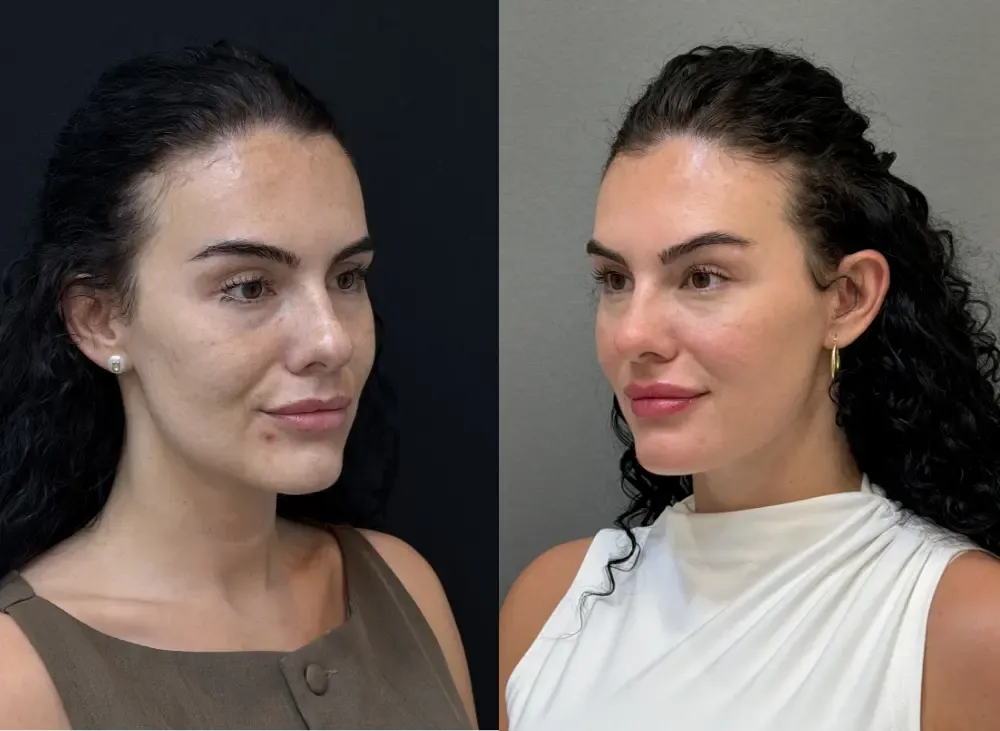
Facial Fat Transfer, also known as Autologous Fat Grafting or Facial Lipofilling, is a surgical procedure designed to restore lost facial volume using the patient’s own adipose tissue.
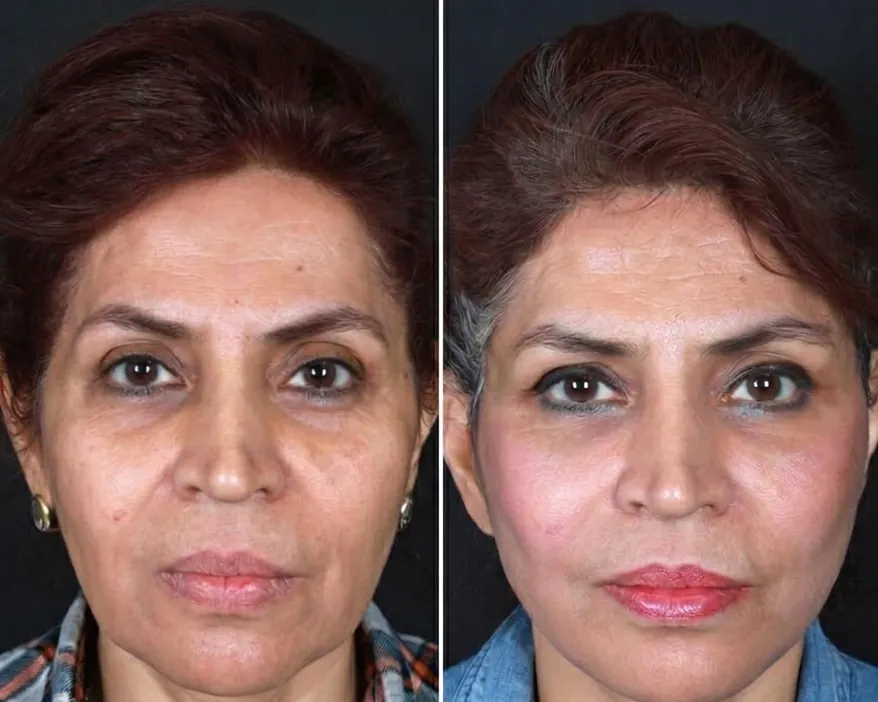
As we age, facial fat compartments gradually lose volume, contributing to hollow temples, sunken cheeks, tear trough deformities, deeper facial folds, and a tired or aged appearance.
Unlike synthetic dermal fillers, autologous fat grafting uses the patient’s own tissue to restore facial volume and improve facial contours.
At Blue Angel Poly Clinic in Dubai, consultations and surgical planning are coordinated under the management of Dr. Eli, in collaboration with Dr. Kamran Asadi, Double Board-Certified Plastic Surgeon, who has over 23 years of surgical experience.
Following the necessary preoperative blood investigations, medical assessment, and anesthesia consultation, suitable patients undergo their surgical procedures at Emirates Hospital Dubai.
All facial fat transfer surgeries are performed by Dr. Kamran Asadi at Emirates Hospital Dubai, not at Blue Angel Poly Clinic.
The primary goal is to achieve natural-looking facial rejuvenation, restore harmonious facial proportions, and provide long-lasting volume enhancement.


Microfat vs. Nanofat: Understanding the Difference
Microfat Transfer for Natural Facial Volume Restoration
Microfat consists of carefully harvested and processed autologous adipose tissue containing viable fat cells. It is primarily used to restore volume in areas affected by age-related fat loss or naturally deficient facial fat compartments.
Common treatment areas include:
- Hollow temples and forehead
- Sunken cheeks and midface volume loss
- Under-eye hollows and tear trough deformities
- Nasolabial folds
- Chin and jawline contouring
- Correction of selected facial asymmetries
- Rejuvenation of the dorsal hands
- Selected nasal contour irregularities and nonsurgical contour enhancement
Microfat is particularly beneficial for patients who require volume restoration in multiple facial regions.
Nanofat Transfer for Skin Quality and Rejuvenation
Nanofat is a finely emulsified and processed form of adipose tissue, primarily used for skin rejuvenation rather than significant volumetric enhancement.
Nanofat may help improve the appearance of fine lines, crepey skin, uneven skin texture, and selected superficial scars.
Its potential regenerative properties remain an area of ongoing clinical research, and treatment outcomes vary between individuals.
Microfat and nanofat can be combined in appropriately selected patients to address both facial volume loss and skin-quality concerns.
Under-Eye Fat Transfer for Dark Circles and Tear Trough Hollows
Tear trough hollowing is a common cause of under-eye shadows and a tired appearance.
Microfat transfer to the infraorbital region can help restore lost volume, soften the tear trough depression, and create a smoother transition between the lower eyelid and cheek.
In selected patients, nanofat may also be used to improve the appearance of thin under-eye skin, fine wrinkles, and skin texture.
Combining these techniques may provide a natural, potentially long-lasting alternative to repeated under-eye dermal filler injections.
However, periorbital dark circles have several possible causes, including hyperpigmentation, visible superficial blood vessels, genetic factors, skin laxity, and lower eyelid fat prolapse.
These conditions may require different or additional treatments.
Autologous fat grafting is particularly suitable for patients whose dark circles are predominantly caused by tear trough hollowing and age-related volume loss.


Facial Fat Transfer vs. Dermal Fillers
Both autologous fat grafting and injectable dermal fillers can restore facial volume. However, they differ in composition, longevity, biological behavior, and potential complications.
Potential Complications of Hyaluronic Acid Fillers Under the Eyes
Hyaluronic acid fillers offer immediate volume correction without surgical fat harvesting.
However, superficial placement of hyaluronic acid filler beneath the thin skin of the lower eyelid may cause a bluish or grayish discoloration known as the Tyndall Effect.
Residual filler may persist longer than expected and contribute to chronic periorbital edema, puffiness, visible contour irregularities, or an unnatural appearance.
Other possible complications include filler migration, palpable nodules, and persistent swelling.
Why Choose Autologous Facial Fat Transfer?
Potential advantages include:
- Natural-looking restoration of facial volume
- Treatment of multiple facial areas during one procedure
- Biological integration of surviving fat cells into surrounding tissues
- Potentially permanent retention of a proportion of transplanted fat
- Reduced need for repeated dermal filler treatments in selected patients
Fat grafting is a surgical procedure, and outcomes depend on surgical technique, patient anatomy, healing, and graft survival.
Unlike hyaluronic acid fillers, transplanted fat cannot be dissolved using hyaluronidase.
Renuva vs. Autologous Fat Transfer
Renuva is a human-derived Adipose Extracellular Matrix (AEM) designed to support soft-tissue volume restoration and tissue remodeling.
Unlike autologous fat grafting, Renuva does not contain living fat cells harvested from the patient’s own body.
Instead, it functions as a biological scaffold that may support the development of the patient’s own adipose tissue within selected treatment areas.
Renuva may be considered for localized soft-tissue volume deficiencies, whereas microfat transfer uses autologous adipose tissue to restore volume across larger facial regions.
These treatments have different clinical indications, benefits, and limitations.
The most appropriate option depends on the patient’s facial anatomy, medical history, treatment objectives, and clinical assessment.
Facial Fat Transfer vs. Sculptra, Radiesse, and Ellansé
Sculptra, Radiesse, and Ellansé are injectable biostimulatory products used for selected facial volume restoration and collagen-stimulation treatments.
Unlike autologous fat grafting, these products introduce manufactured biomaterials into facial tissues.
Although many patients tolerate these treatments well, potential adverse effects include delayed inflammatory reactions, nodules, and foreign-body granuloma formation.
These complications do not occur in every patient.
For individuals requiring more extensive facial volume restoration, autologous fat transfer may be considered as an alternative to repeated biostimulatory injections.
Facial Fat Transfer for Men and Athletic Patients
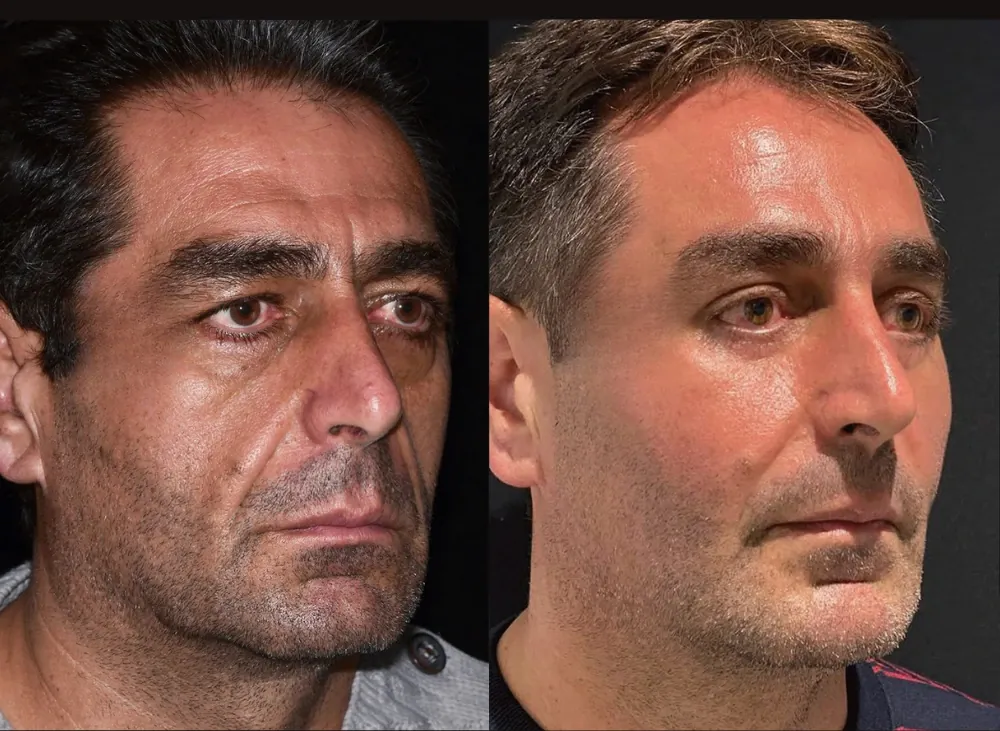
Men who exercise regularly or maintain a low body-fat percentage may develop hollow temples, sunken cheeks, and reduced midface volume.
These changes can create a tired or prematurely aged appearance despite excellent physical fitness.
Microfat transfer may restore natural facial fullness while maintaining masculine facial proportions and jawline definition.
In selected male patients, fat grafting may be combined with an endoscopic forehead lift or endoscopic midface lift to address both soft-tissue descent and volume deficiency.
The objective is balanced facial rejuvenation without excessive fullness or feminization of facial features.
High-Resolution Ultrasound Assessment of Previous Fillers
Some patients considering facial fat transfer have a history of previous dermal filler injections, particularly in the periorbital region.
Residual filler may contribute to persistent swelling, palpable nodules, contour irregularities, or discoloration associated with the Tyndall Effect.
At Blue Angel Poly Clinic, high-resolution Clarius Ultrasound may be used to evaluate the location, depth, and distribution of previously injected filler materials.
When clinically indicated, ultrasound-guided hyaluronidase injections may allow more targeted dissolution of residual hyaluronic acid fillers before facial fat grafting.
This assessment can be particularly useful in patients with multiple previous filler treatments or persistent under-eye puffiness.
Not all patients require filler dissolution. Treatment planning is individualized according to clinical examination, ultrasound findings, and facial anatomy.
Facial Fat Transfer in Patients with Autoimmune Diseases
Patients with autoimmune disorders require individualized medical evaluation before undergoing aesthetic injectable treatments or surgery.
In some individuals, collagen-stimulating injectables such as Sculptra, Radiesse, and Ellansé may be associated with delayed inflammatory reactions, nodules, or granuloma formation.
However, an autoimmune diagnosis does not necessarily mean that these complications will occur.
Autologous fat grafting may be considered as an alternative in carefully selected patients, as it uses the patient’s own adipose tissue rather than synthetic filler materials.
Nevertheless, fat transfer is not automatically safer for all patients with autoimmune conditions.
Disease activity, immunosuppressive medications, wound-healing capacity, and individual surgical risks must be assessed before proceeding.
Combining Facial Fat Transfer with Plastic Surgery
Facial aging involves both soft-tissue volume loss and descent of deeper facial structures.
While facelift surgery repositions descended tissues, autologous fat grafting restores deficient facial volume.
Combining these approaches may achieve more comprehensive and natural-looking facial rejuvenation.
Deep Plane Facelift with Fat Transfer
A Deep Plane Facelift repositions deeper facial structures to improve significant facial sagging and restore youthful contours.
However, lifting alone does not replace lost facial fat.
Combining a Deep Plane Facelift with microfat grafting may restore volume in the temples, cheeks, and midface while improving overall facial harmony.
Face and Neck Lift with Fat Transfer
Patients undergoing face and neck lift surgery may benefit from simultaneous autologous fat grafting to restore facial volume.
In appropriately selected patients, fat transfer to the dorsal hands may also be performed during the same surgical session.
Endoscopic Forehead and Temporal Lift
Patients with forehead or temporal hollowing may benefit from combining an endoscopic forehead or temporal lift with microfat transfer.
This approach may be particularly useful in individuals with naturally thin upper facial structures.
Endoscopic Midface Lift
An endoscopic midface lift addresses selected forms of cheek descent and midfacial ptosis.
When midface volume loss is also present, microfat grafting may be added to restore natural contours and improve facial balance.
Blepharoplasty and Other Facial Procedures
Autologous fat transfer may complement selected upper or lower blepharoplasty procedures, SMAS facelift surgery, and other facial contouring operations.
The surgeon determines whether fat grafting, fat repositioning, or another technique is most appropriate based on the patient’s anatomy and treatment goals.
All combined surgical procedures are performed at Emirates Hospital Dubai, following appropriate preoperative assessment and anesthesia evaluation.
How Is Facial Fat Transfer Performed?
Step 1 – Consultation and Facial Assessment
Dr. Kamran Asadi evaluates facial anatomy, the degree of volume loss, medical history, and individual aesthetic goals.
Step 2 – Fat Harvesting
Adipose tissue is harvested from a suitable donor area, commonly the abdomen, flanks, or thighs, using specialized liposuction techniques.
Step 3 – Fat Processing
The harvested adipose tissue is carefully processed using appropriate techniques to prepare microfat or nanofat according to the intended clinical application.
Step 4 – Fat Grafting
The prepared fat is injected in small, controlled quantities into selected facial areas to restore volume and achieve smooth, natural-looking contours.
Step 5 – Recovery and Follow-Up
Patients receive individualized postoperative care instructions and follow-up appointments.
The type of anesthesia depends on the extent of fat grafting and whether additional surgical procedures are performed.
How Long Does Facial Fat Transfer Last?
Facial fat transfer can provide long-lasting and, in some cases, permanent volume restoration.
During the initial healing period, a proportion of the transplanted fat is naturally resorbed.
Surviving adipocytes may establish a blood supply and integrate into the surrounding tissues.
Fat graft retention varies between patients, and no fixed survival percentage can be guaranteed.
Once successfully established, surviving fat cells may remain for many years, although natural aging and changes in body weight continue to influence facial appearance.
Some patients achieve satisfactory results after one procedure, while others may require an additional fat grafting session.
Recovery, Postoperative Care, and Potential Complications
Temporary swelling, bruising, tenderness, and facial fullness are common after facial fat grafting.
Recovery time depends on the extent of the procedure and whether additional facial surgeries are performed.
Patients are generally advised to avoid unnecessary pressure or massage over grafted areas, follow prescribed postoperative medications, protect the skin from excessive sun exposure, and avoid strenuous physical activity until medically cleared.
Maintaining a stable body weight may help preserve the aesthetic outcome.
Potential complications include infection, bleeding, asymmetry, contour irregularities, fat necrosis, oil cyst formation, and unpredictable graft retention.
Rare but serious vascular complications, including vision loss or stroke, are also possible.
Careful surgical planning, appropriate patient selection, and postoperative follow-up are essential.
Who Is a Suitable Candidate for Facial Fat Transfer?
Suitable candidates may include women and men experiencing age-related facial volume loss, individuals with naturally thin facial features, hollow temples or cheeks, and patients with under-eye volume deficiency.
Patients seeking natural-looking facial rejuvenation or considering combined facelift procedures may also benefit.
Individuals with autoimmune conditions, previous dermal fillers, or significant medical histories require additional evaluation.
Adequate donor fat, realistic expectations, and appropriate medical fitness for surgery are important considerations.
Why Choose Blue Angel Poly Clinic in Dubai?
Blue Angel Poly Clinic provides personalized consultations and facial rejuvenation planning in collaboration with Dr. Kamran Asadi.
The approach includes individualized selection of microfat and nanofat techniques, ultrasound assessment of previous fillers when indicated, and planning for combined facial rejuvenation procedures.
Under the management of Dr. Eli, patients can receive coordinated preoperative consultations and treatment planning.
All surgical procedures are performed at Emirates Hospital Dubai, following the required medical investigations and anesthesia assessment.
Ask for more informationFrequently Asked Questions About Facial Fat Transfer
Is Facial Fat Transfer Permanent?
Surviving transplanted fat cells may remain permanently. However, some fat absorption occurs during healing, and future changes in body weight and natural aging may affect the final result.
Can Fat Transfer Treat Dark Circles Under the Eyes?
Fat transfer may provide long-lasting improvement when dark circles are primarily caused by tear trough hollowing and volume deficiency.
Dark circles caused by pigmentation, vascular visibility, or other anatomical factors may require additional treatments.
Is Facial Fat Transfer Better Than Dermal Fillers?
Fat transfer may be more suitable for selected patients requiring extensive volume restoration, while dermal fillers may be appropriate for smaller, nonsurgical corrections.
Can Facial Fat Transfer Be Combined with a Facelift?
Yes. In appropriately selected patients, autologous fat grafting may be combined with a Deep Plane Facelift, Neck Lift, or endoscopic facial surgery during the same operation.
Where Is Facial Fat Transfer Performed in Dubai?
Consultations and surgical planning are coordinated through Blue Angel Poly Clinic.
All facial fat transfer surgeries are performed by Dr. Kamran Asadi at Emirates Hospital Dubai.
Make an appointment
Meet the doctor, have your skin assessed with ultrasound, and decide with a clear plan.
- Address
- 181A Al Wasl Road, Al Bada'a, Dubai
- Hours
- Tuesday to Sunday, 10:00AM to 7:00PM
- +971 52 699 3843